

July 23, 2026
About the Author: Stefan Joubert

For many violinists, the left hand often receives the greatest attention. Finger placement, shifting and intonation are frequently the focus of practice, while bow control can sometimes be overlooked.
Yet many teachers would argue that the bow has an even greater influence on the sound you produce.
Even the most accurately placed notes can sound uneven if the bow does not travel smoothly across the strings.
One of the most valuable skills every violinist should develop is a consistent bow path.
A bow that moves parallel to the bridge produces a clearer tone, greater consistency and more control over dynamics and articulation.
Whether you are a beginner learning your first scales or an advanced player refining concerto repertoire, developing accurate bow alignment is fundamental to expressive and confident violin playing.

Why Bow Alignment Is So Important For Beautiful Tone Production
The violin produces its finest sound when the bow remains straight and travels parallel to the bridge throughout each stroke.
This allows the bow hair to maintain consistent contact with the string, producing a balanced, resonant tone.
When the bow gradually drifts towards the fingerboard or bridge, several issues may arise:
- Uneven tone quality
- Inconsistent volume
- Unwanted scratching or harshness
- Reduced control over articulation
- Increased tension in the bow arm
Developing a controlled bow stroke helps reduce these problems and allows every note to sound more focused and controlled.

Understanding Why The Bow Drifts
Many violinists are surprised to discover that an uneven bow stroke is rarely caused by the wrist alone.
One thing our teachers notice regularly is that students often believe the problem lies in their wrist, when in reality the elbow or shoulder is usually responsible.
Instead, a crooked bow usually results from the coordination of the entire right arm.
Several factors may contribute to a crooked bow, including:
- Raising or lowering the elbow too much during the stroke
- Locking the wrist instead of allowing natural flexibility
- Excessive shoulder movement
- Uneven hand position on the bow
- Limited awareness of the bow’s position between the bridge and fingerboard
Understanding these habits is the first step towards correcting them.

Simple Exercises To Improve Bow Alignment
Improving bow control does not require complicated exercises.
Consistent attention to a few carefully chosen practice methods can produce significant improvements.
One of the most effective exercises is to play long, slow bows on open strings.
Without the distraction of left-hand fingering, you can focus entirely on maintaining a straight path from frog to tip.
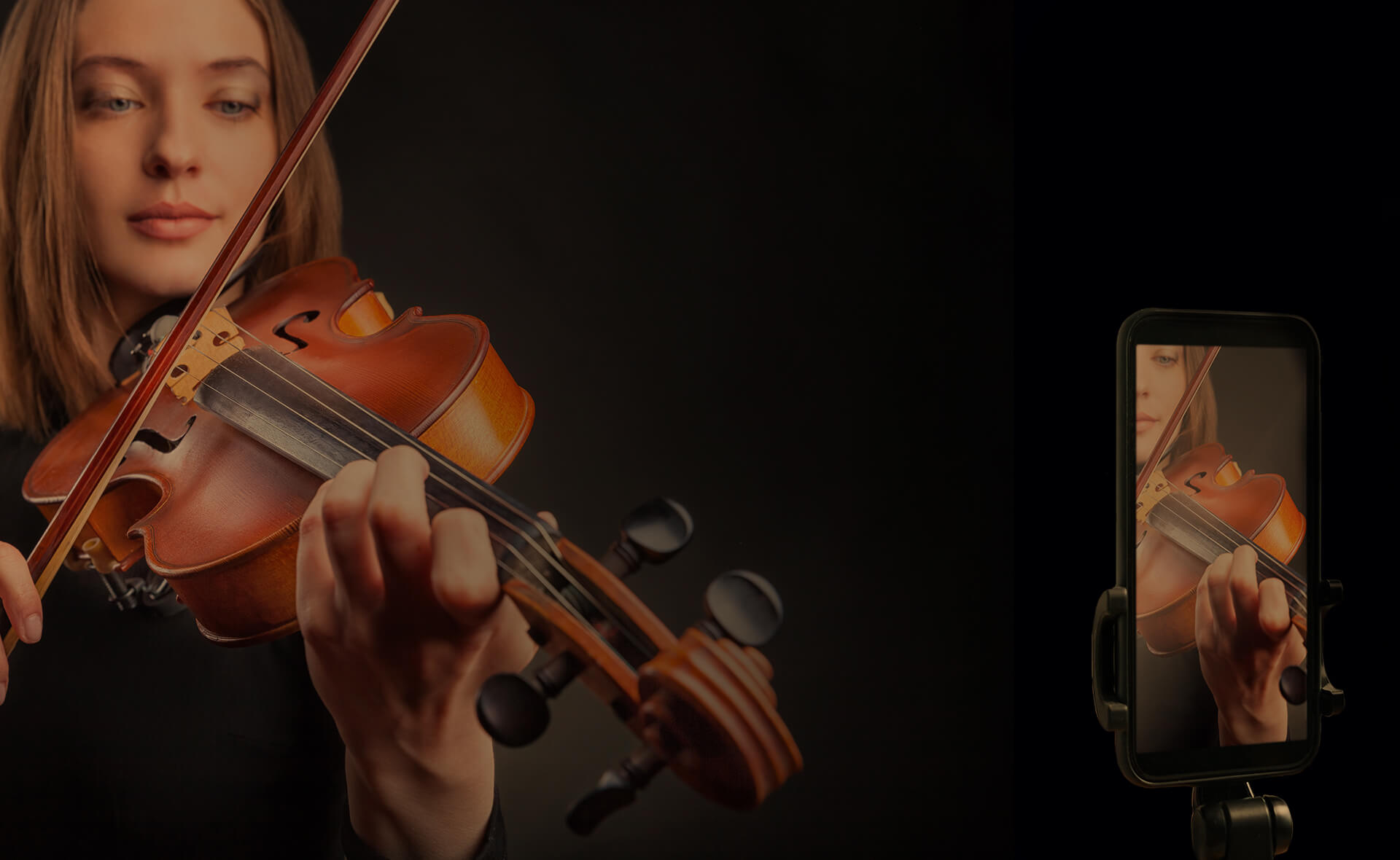
Practising in front of a mirror is equally valuable.
Watching your bow from the front allows you to identify whether it remains parallel to the bridge throughout the stroke.
You may also find it helpful to divide the bow into sections, practising separately at the frog, middle and tip before combining the full stroke.
This develops control across the entire length of the bow rather than only in its most comfortable area.

How Relaxation Improves Bow Control
Many players mistakenly believe that greater control comes from gripping the bow more firmly.
In reality, excessive tension often reduces flexibility and makes it more difficult to maintain a straight bow.
A relaxed bow hold allows the fingers, wrist and elbow to move naturally together.
The bow can then respond freely to subtle adjustments without forcing unnecessary movement.
During practice, regularly check that your shoulders remain relaxed, your thumb stays flexible and your breathing remains calm.
Good posture and relaxed movement often lead to immediate improvements in tone quality.

Applying Straight Bow Technique To Musical Performance
Straight bowing should not remain simply a technical exercise.
Once it becomes comfortable during scales and open-string practice, it should be incorporated into every piece you study.
Pay attention to how different musical passages require varying bow speeds, contact points and dynamic levels while still maintaining a straight bow path.
Whether performing smooth legato melodies, crisp détaché passages or energetic spiccato, the underlying principle remains the same: a consistent bow produces a more beautiful and reliable sound.
As your control develops, you will notice greater confidence in your phrasing, cleaner articulation and a richer, more expressive tone.

The Importance Of Individual Guidance
Although instructional videos and practice books can be useful, developing an efficient bow stroke often benefits from professional guidance.
Small adjustments to arm position, wrist flexibility or bow grip can make a remarkable difference, yet these details are not always easy to recognise independently.
An experienced violin teacher can observe your movement closely, identify inefficient habits and provide personalised exercises suited to your current level.
This individual feedback often accelerates progress while helping to prevent unnecessary tension from becoming a long-term habit.

Build Strong Bow Technique From The Very Beginning
A controlled and well-aligned bow stroke is one of the most important foundations of violin playing.
It supports beautiful tone production, reliable intonation, expressive phrasing and greater technical confidence across every style of music.
At the London Violin Institute, our in person and online personalised lessons for adults place strong emphasis on healthy bow technique alongside musical interpretation and technical development.
With regular feedback and consistent practice, most violinists notice significant improvements in both tone and confidence.
Whether you are beginning your violin journey or refining advanced repertoire, developing reliable bow control will benefit every aspect of your playing for years to come.
Related Articles:
RELATED POSTS


